Christmas baking with kids
Gingerbread, iced stars and a great deal of flour: eight bakes children can actually do, and what to wear while they do them.

Christmas baking with kids is not really about the biscuits. It is about the flour on the ceiling, and the one gingerbread man with no head, and the fact that everyone is in the same room for an hour.
We know this better than most. One of our three rooms is a kitchen, The Kitchen, with real flour, real dough and a counter built to be made a mess of, because nothing makes a child forget a camera faster than being handed a rolling pin. We have watched a lot of families bake, and we have noticed which bakes end in laughing and which end in tears.
So here are eight Christmas bakes that children can actually do, from gingerbread people to snowflakes you can hang on the tree, with one reliable recipe to start from. Plus what to wear while you bake, and how to take a photograph of it that you will want to keep.
Before you start: the things you need
Almost every bake below uses the same kit. Get it out before you call the children in, because the ten minutes spent looking for the cutters is where the afternoon goes wrong.
An apron each. Or an old shirt, back to front. It is less about keeping clothes clean than about the ceremony of putting one on.
A rolling pin per child. Two children and one rolling pin is a negotiation you don’t need. Small wooden ones are cheap and the right size for small hands.
Cutters. Gingerbread people, stars, trees, hearts and snowflakes. Big, simple shapes work best for small children; tiny, fiddly ones tear.
Baking paper. Rolling dough between two sheets of it means no sticking and far less flour everywhere. Far less, not none.
Icing sugar and piping bags. A freezer bag with the corner snipped off is a perfectly good piping bag and easier for children to squeeze.
Sprinkles. In shallow bowls, not the jar, unless you want the whole jar on one biscuit.
A tray per child. The single best tip we have. Each child decorates on their own tray, which keeps the sprinkles contained and ends every argument about whose biscuit is whose.
A cooling rack. Biscuits have to be completely cold before they are iced, which is a hard thing to explain to a four-year-old. A rack speeds it up.
Time. Two hours, realistically, with a break while things bake. Start earlier than you think.
Bake 01
Gingerbread people
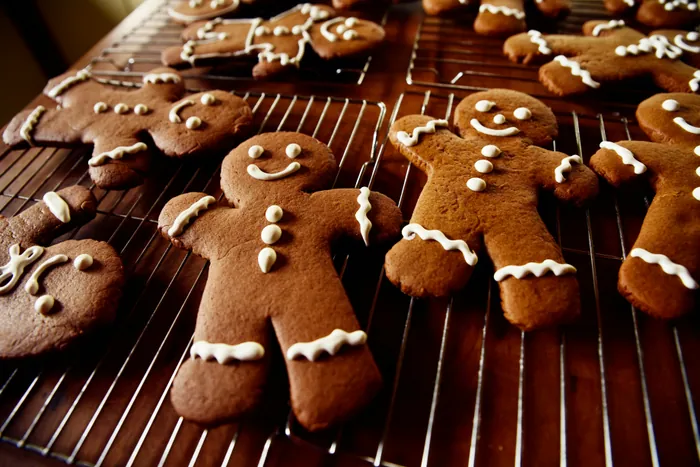
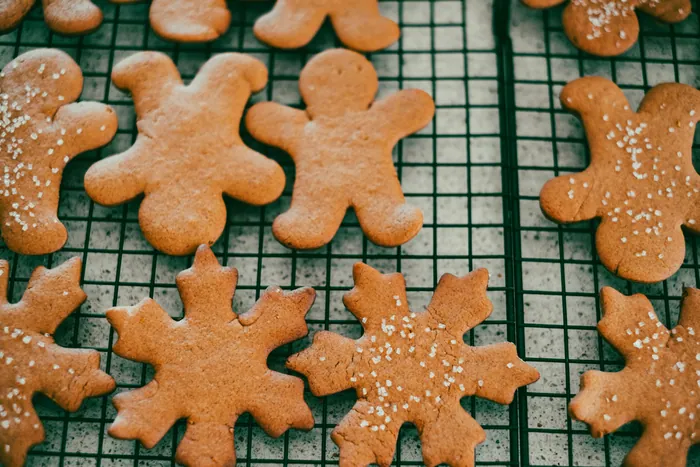
The one to start with. Gingerbread dough is forgiving, it rolls well, it holds its shape in the oven and it smells like Christmas while it bakes. This is the recipe we would give a friend:
You need: 350g plain flour, 1 teaspoon bicarbonate of soda, 2 teaspoons ground ginger, 1 teaspoon ground cinnamon, 125g butter, 175g light soft brown sugar, 1 egg and 4 tablespoons of golden syrup.
Then: heat the oven to 180°C (160°C fan). Mix the flour, bicarbonate and spices, then rub in the butter until it looks like breadcrumbs, which is an excellent job for small fingers. Stir in the sugar, then the beaten egg and syrup, and bring it together into a dough. Roll it out between two sheets of baking paper to about 5mm, cut out your people, and bake for 12 to 15 minutes until golden. Cool on a rack before anyone goes near them with icing.
Bake 02
Rolling and cutting
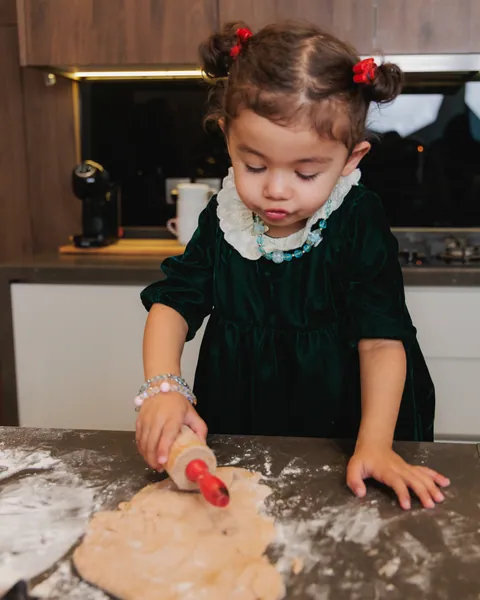
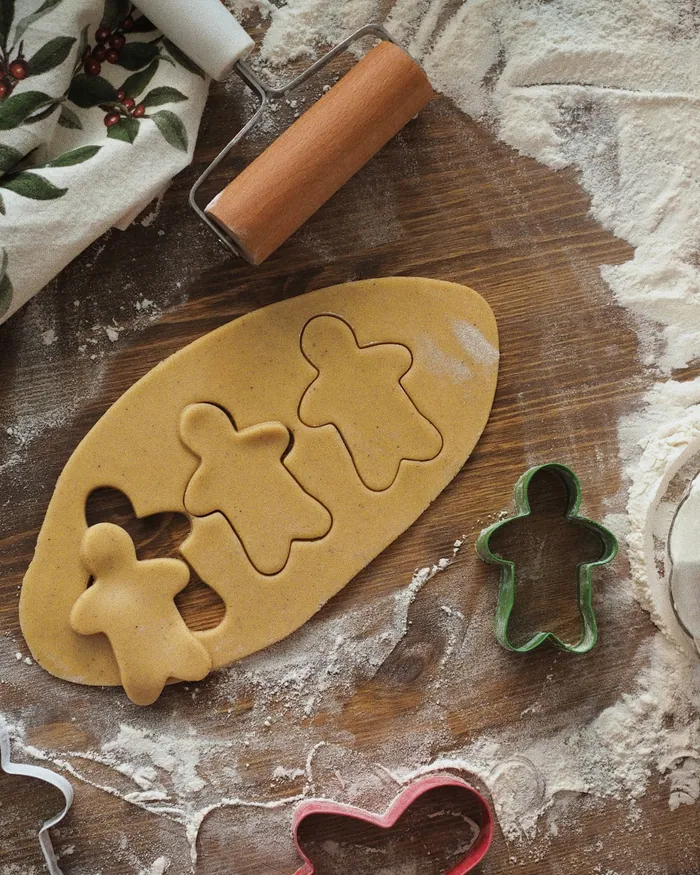
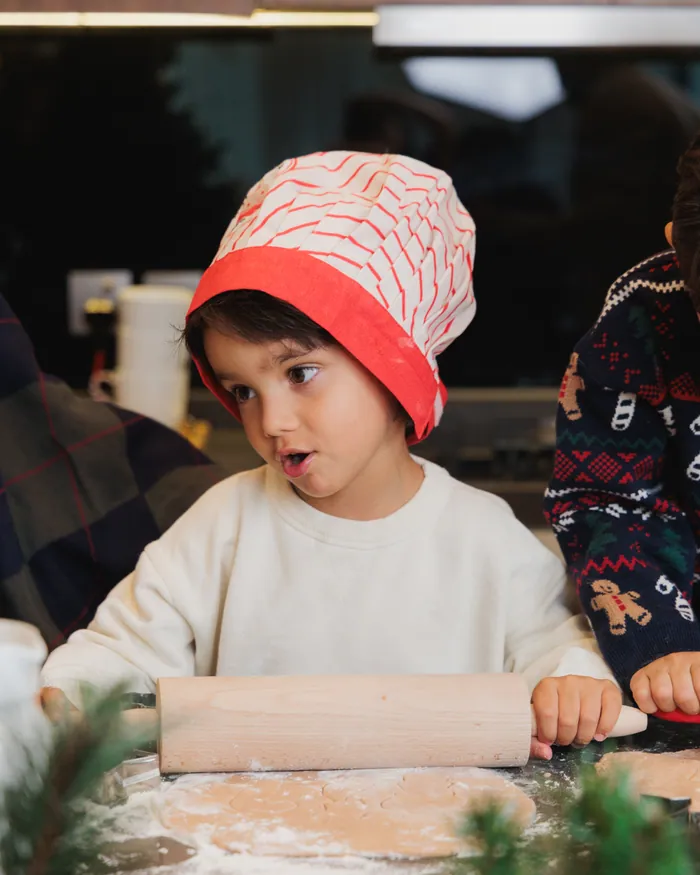
For children under five, this is the whole event. Rolling, pressing a cutter in, peeling the shape away and rolling the scraps again can happily fill forty minutes, and it is the part that makes the best photographs, because everyone is concentrating on something that isn’t the camera.
Chill the dough for twenty minutes if it gets soft and sticky, flour the cutters rather than the dough, and accept that the last few shapes will be a little grey from all the rerolling. They taste exactly the same.
Bake 03
Stars with white icing
Gingerbread stars piped with a few lines of white icing look like they came from a bakery and are well within the reach of a seven-year-old. The secret is restraint: a line along each point, a dot in the middle, and stop.
For piping icing, mix icing sugar with a few drops of water or lemon juice until it is thick enough to hold a line. If it runs, add more sugar; if it won’t come out of the bag, add a drop more water.

Bake 04
Sugar biscuits to decorate
For the youngest bakers, or the ones who only really want to decorate, bake a batch of plain biscuits the day before. Then the afternoon is all colour: red stockings, green trees, white snowmen and a great deal of icing on faces.
Coloured icing for flooding a biscuit needs to be a little runnier than piping icing. Split one bowl of white into three and colour each one, and you have more than enough for a family.

Bake 05
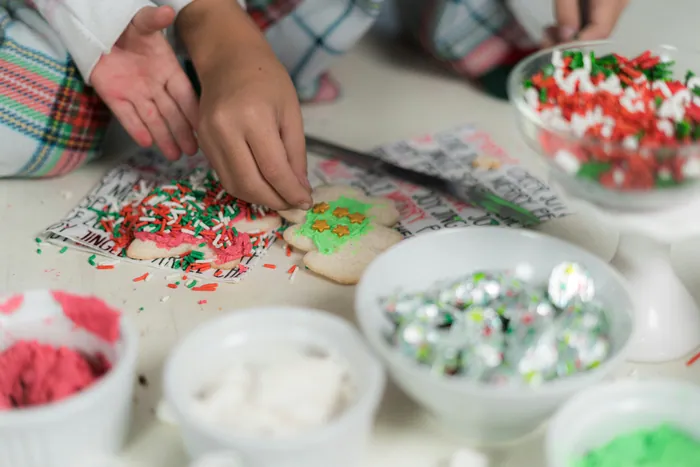
Sprinkles, and letting go
At some point a small child will tip an entire bowl of sprinkles onto one biscuit. This is not a disaster; it is the best biscuit on the tray, and it is the one they will insist on giving to their grandmother.
Our advice, from a great many sessions in a kitchen: decide in advance that the biscuits don’t need to look good. The moment you correct someone’s icing, the fun goes out of the room, and so does the photograph.
Bake 06
Little gingerbread houses
A full gingerbread house, walls and roof and all, is an adult project with children watching. Flat gingerbread houses are the version everyone can do: cut the dough into house shapes, bake, then pipe on windows, a door and a roof line.
They are also lovely hung on the tree or tied to a present with ribbon, which brings us to the next one.

Bake 07
Snowflakes for the tree
Before the snowflakes go into the oven, push a straw through the top of each one to make a hole. When they are baked and iced, thread a ribbon through and hang them on the tree, where they will last until someone small eats one when nobody is looking.
Gingerbread keeps its shape well enough for this, and a handful on the lower branches makes a tree that the children decorated themselves, which is the best kind.

Bake 08
A plate for Santa
The last bake of the year, on Christmas Eve. Choose the best three from everything baked in December, put them on a plate with a glass of milk and a carrot for the reindeer, and leave them by the tree.
We like the plain ones for this, not iced, just golden gingerbread people cooling on the rack. Whoever eats them later will appreciate it.
What to wear while you bake
Pyjamas. Honestly. Baking is the most relaxed part of Christmas, and matching pyjamas in gingham, tartan or stripes look exactly right next to a floured counter. Checks and stripes hide flour better than plain colours, and red and white is the combination we see most often and like best.
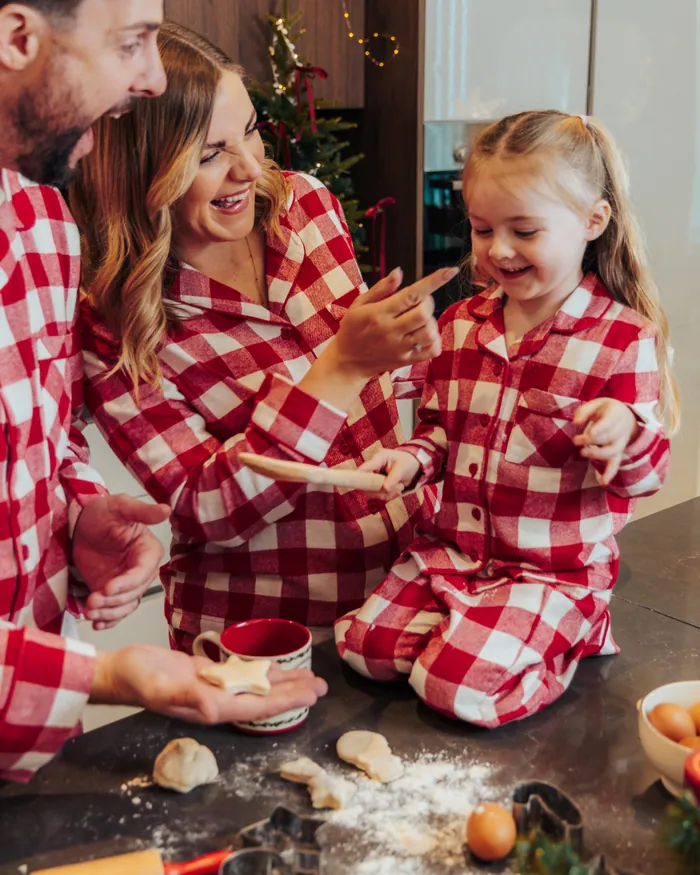
Very dark knits show every speck of flour, which is either a problem or the point, depending on the family. If somebody insists on dressing up, let them, and give them an apron. And if someone throws a handful of flour in the air, which someone always does, have the camera ready rather than the dustpan.

A knitted hat is optional, but we have yet to see one ruin a photograph. There are twelve more ideas in our guide to what to wear for Christmas family photos.
Icing, simply
You need two kinds of icing, and both are just icing sugar and a little liquid. For piping lines and dots, mix icing sugar with water or lemon juice a few drops at a time until it holds a line like toothpaste. For flooding a biscuit with colour, loosen some of that with a little more water until it settles flat in a few seconds.
Gel food colouring gives stronger colours than liquid and doesn’t make the icing runny; a tiny amount on the end of a cocktail stick is enough. Red, green and white will carry you through all of Christmas.
Let iced biscuits dry for a few hours before stacking them, and overnight if they are going into bags as presents. Children will want to eat them straight away. One each, while the rest dry, keeps the peace.
Making Christmas baking with kids easier on yourself
Split it over two days. Make and chill the dough one evening, then bake and decorate the next afternoon. Children only really want the fun parts, and the fun parts are rolling, cutting and icing.
Have one job per child. Measuring, mixing, cracking the egg, pressing the cutters. Rotate them if you have more children than jobs, and give the youngest the most satisfying one, which is always rubbing in the butter.
Keep the oven out of it. The adult does the oven, every time, however old the children are. Make it a moment: the tray goes in, the timer goes on, and everyone watches through the glass.
Plan for the end. Twenty minutes before you finish, stop baking and start clearing. A bowl of warm soapy water and a cloth each turns washing up into another job, and the kitchen is back to normal before anyone is tired.
Save the best one. Every child should end the afternoon with one biscuit they are proud of, wrapped in a bag and tied with ribbon to give to somebody. It is the part they will remember.
Taking the photograph at home
Bake near a window if you can; daylight from one side flatters everybody and makes flour glow. Get down to counter height instead of shooting from above, so you see faces and not the tops of heads. Use burst mode for the moment flour goes up in the air. And don’t tidy first. The mess is what makes the picture look like a Christmas you actually had, rather than one you arranged.
Then put the phone down for a while and bake. The best photograph of the afternoon is usually the one taken by someone who isn’t in charge of the icing.
Let’s sum up
Get everything out before the children arrive, give every child a rolling pin and a tray, and choose bakes that match their age: rolling and cutting for the little ones, piping and houses for the older ones, sprinkles for everybody. Make one batch of gingerbread and it will carry you from stars to snowflakes to Santa’s plate. Then let the biscuits look however they look. Christmas baking with kids is about the afternoon, not the biscuits.
Questions about Christmas baking with kids
Two-year-olds can press cutters and add sprinkles; four and five-year-olds can roll dough and rub in butter; by seven most children can pipe simple icing. The oven stays with the adults at every age.
Yes. Wrap it well and keep it in the fridge for a day or two, or freeze it. Let it soften a little before rolling, and you can split the baking over two afternoons.
In an airtight tin they will keep for about a week, though they are rarely given the chance. Iced ones are best eaten sooner, as the icing softens over time.
Laying a table for the results? Our festive tablescapes has ten ideas.

The Setup Collective builds three Christmas rooms in Dubai each season, The Forest, The Tree and The Kitchen, then photographs families in them. Candidly: nobody gets told to tuck their chin in. Who we are