How to get natural photos of children
Ten things we do so a four-year-old forgets the camera, and the ones you can borrow at home.
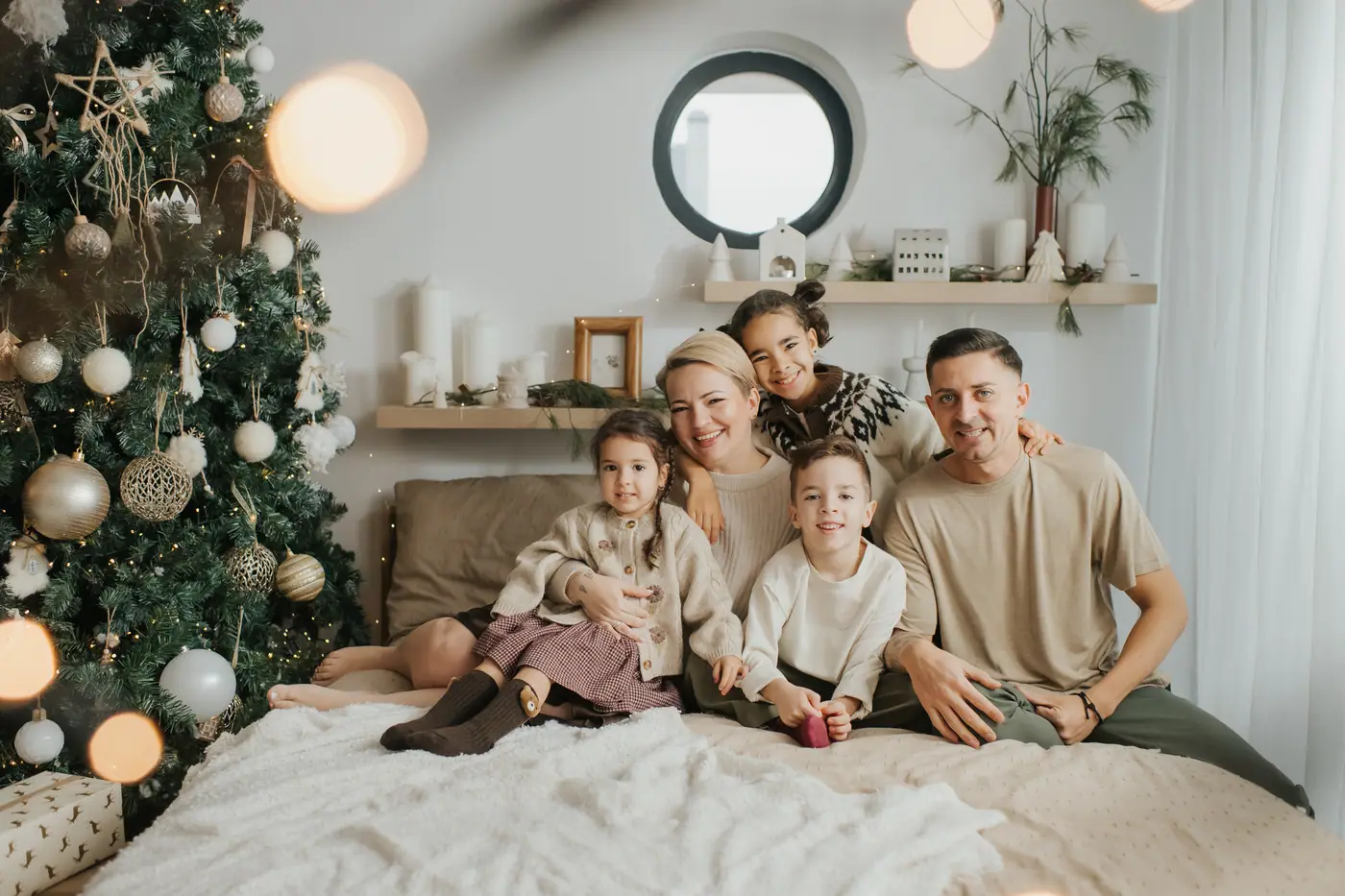
The good photograph almost never arrives when everyone is looking. It arrives about four seconds later, when your son says something to his sister and you laugh before you have decided to.
Natural photos of children are the whole idea behind how we work. We don’t ask children to behave, and nobody gets told to tuck their chin in. We build rooms children want to be in, then we get out of the way and wait. After a season of photographing families, we have a fairly clear idea of what makes a small child forget there is a camera in the room, and what makes them freeze.
So here are ten things we do to get natural photos of children. Most of them work just as well with a phone on Christmas morning as they do in one of our rooms, and none of them involve saying cheese.
01
Give them a job
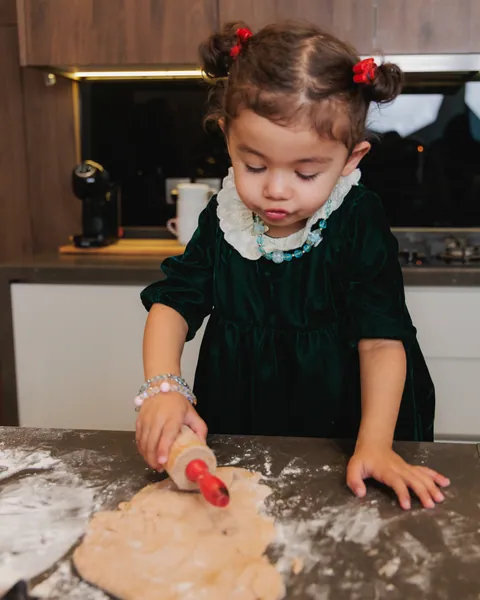
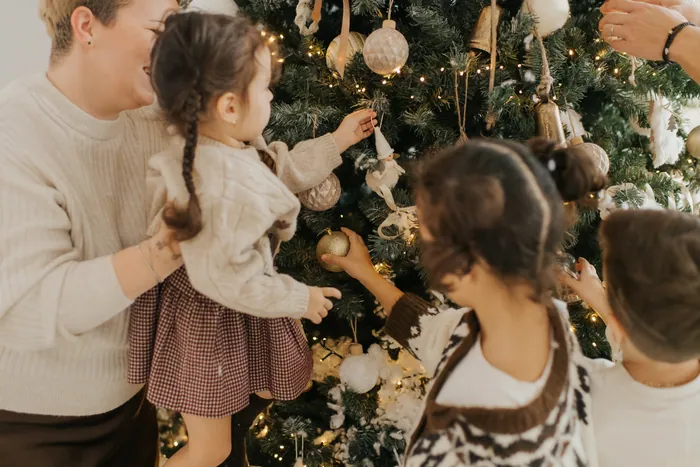
A child with something to do stops performing. Hanging a bauble, carrying a present, stirring the dough, finding the star for the top of the tree: give them a task with a beginning and an end, and they will be concentrating on it within seconds.
The photograph is the concentration. The tongue poking out, the careful hands, the older sister helping. None of it can be posed, and all of it happens on its own once they are busy. The older the child, the bigger the job can be: a ten-year-old will happily be in charge of the lights.
02
Let them move
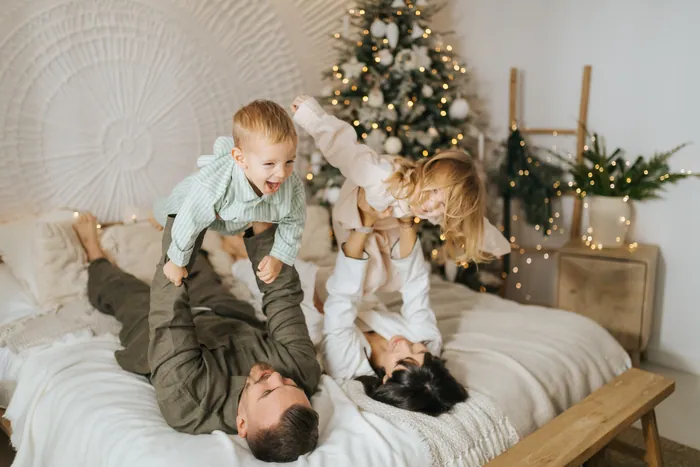
Children are not built to sit still, and photographs of children sitting still look like it. Let them run, jump, spin and climb. Better still, let the grown-ups join in: a toddler flying on a parent’s legs is a better photograph than the same toddler on a parent’s knee every single time.
Movement also burns off nerves. A child who has run around for a minute is a child who has stopped thinking about the stranger with the camera.
03
Stop asking for a smile
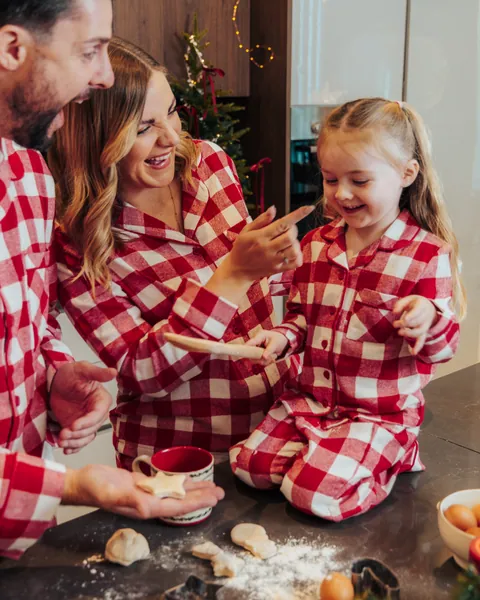
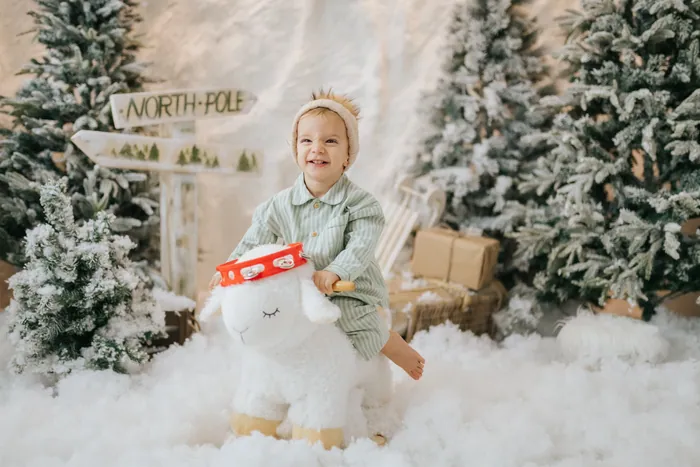
“Smile” produces a very particular face, and every parent knows it: teeth, squint, slight panic. A real smile is a reaction to something, so give them something to react to. A toy that squeaks, a silly word, a sibling pulling a face just out of shot.
We will try for one everybody-looking-at-the-camera frame if you want one, and we are good at it. But the photographs families print tend to be the ones where nobody was asked to do anything at all.
04
Wait four seconds longer
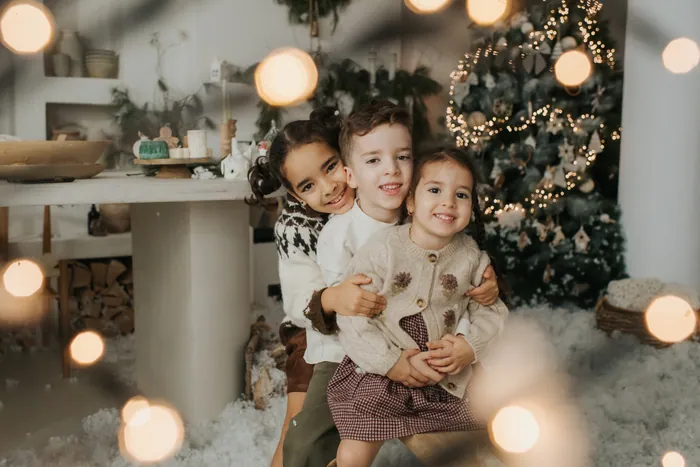
This is the one that matters most. When a group of children is arranged and looking at you, the photograph is usually slightly stiff. Then the moment passes, everybody relaxes, somebody hugs somebody else a little too hard, and there it is.
So don’t lower the camera when the posed moment is over. Keep it up for another few seconds. The picture you wanted is almost always just after the one you were waiting for.
05
Bring the thing they love
A favourite teddy, a particular blanket, the family dog. A child holding the thing they love is a child who has something more interesting to think about than you. It also tells a story, which is the difference between a portrait and a photograph you keep coming back to.
Your first pet comes free with every session, for exactly this reason. Other animals, as it turns out, work too.
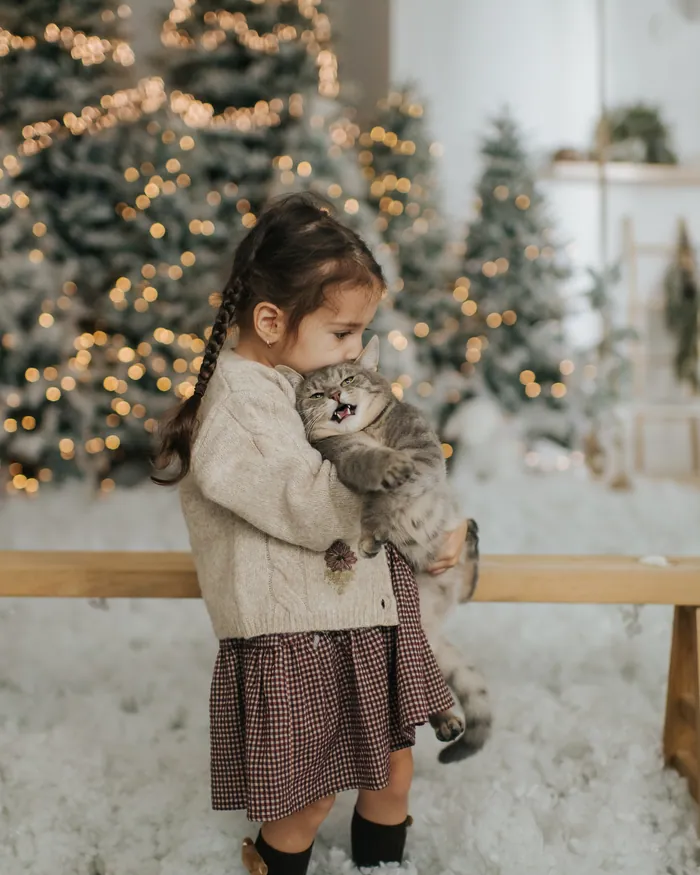
06
Get down to their height
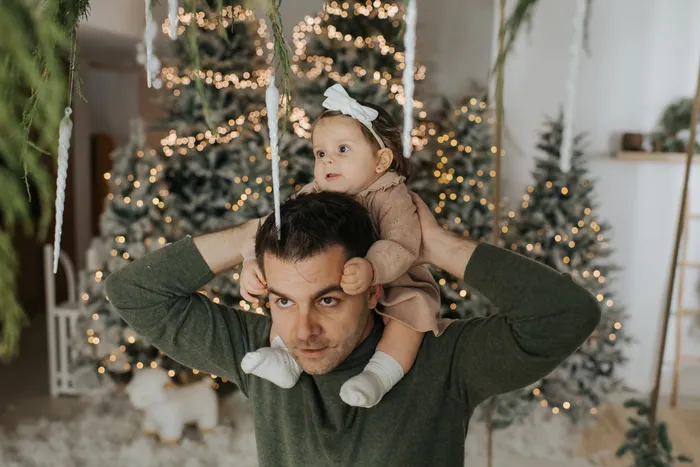
Most photographs of children are taken from an adult’s standing height, looking down, which makes children look small and a little lost. Kneel, sit on the floor or lie on your stomach, and suddenly you are in their world rather than looking into it.
It changes how they look at you, too. A baby at eye level looks straight into the lens with that serious, curious expression babies do so well.
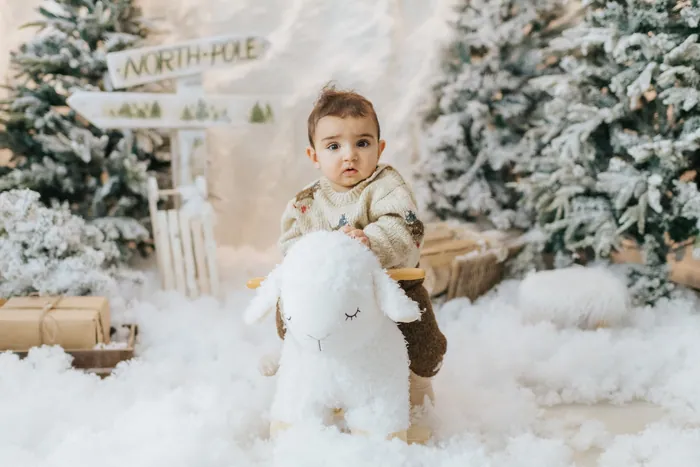
07
Say yes to one thing you’d usually say no to
Jumping on the bed. Throwing the flour. Running in socks. Every child has something they are usually told not to do, and being allowed to do it for five minutes produces a kind of delighted disbelief that you will never get any other way.
It works on toddlers especially. Two small children bouncing on a bed in their pyjamas will give you a photograph of pure joy, and they will be telling people about it for weeks.
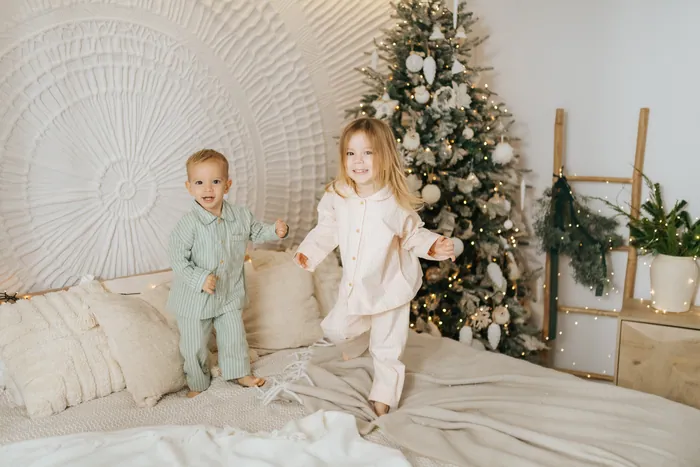
08
Play with them, don’t pose with them
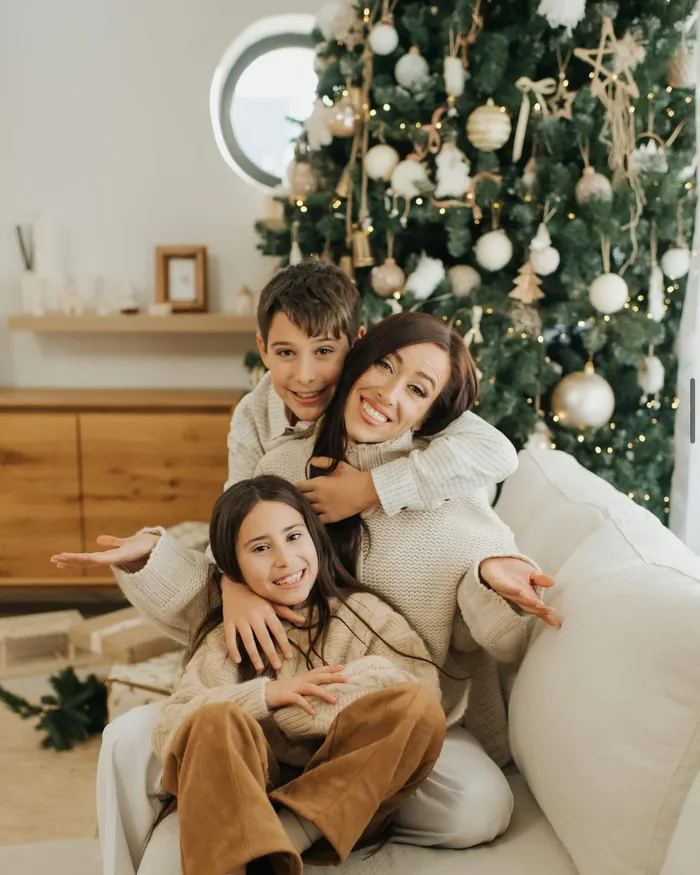
The most natural photographs of children usually have a parent in them, doing something. Lifting, tickling, chasing, reading. Children relax when their parents relax, and they can tell the difference between a parent who is playing and a parent who is waiting for the photograph to be over.
This is the part of the job that is really yours. Forget where the camera is for a few minutes and play with your children. We will do the rest.
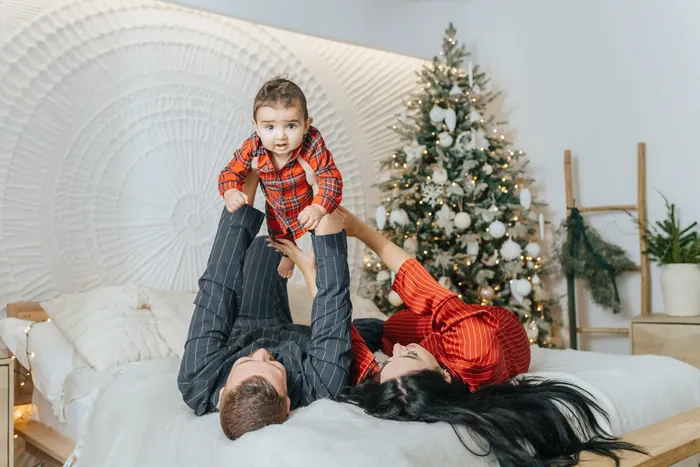
09
Whisper, don’t direct
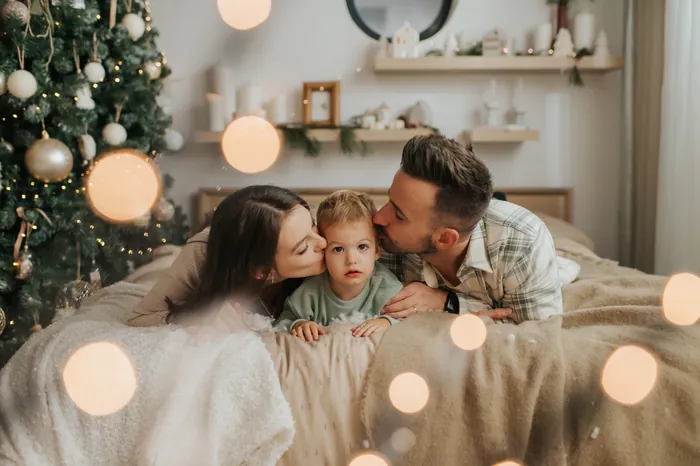
Instructions make children self-conscious. Whispers make them curious. Instead of “look at Mummy,” try whispering something ridiculous in their ear, or telling them a secret, or asking them to guess what Daddy had for breakfast.
Kisses work too, especially on toddlers, who will squirm and giggle and pretend to hate every second of it. It is one of our favourite photographs to take, and one of the easiest.
10
Keep it short, and stop on a high
Children have a limited amount of patience for anything, and photographs are no exception. Twenty or thirty minutes of real play is plenty; after that, the energy goes and it doesn’t come back. It is also why we ask for one outfit each, because changing a child halfway through costs you the best part of the session.
Finish while everyone is still enjoying it. A child who leaves laughing is a child who will be happy to do it again next Christmas, which matters more than any single photograph.
Your part, as a parent
Tell your children the day before that they are going somewhere fun, not somewhere they have to be good. Don’t rehearse smiles in the mirror. Feed them before you leave. Dress them in one outfit they are comfortable in; our guide to what to wear for Christmas family photos has twelve ideas. Bring the teddy.
And then, the hardest part: be in the photographs. You are usually the one taking them, which is why, in most family albums, you are a hand at the edge of the frame. For once, let someone else hold the camera.
Natural photos of children at home, with a phone
Everything above works on Christmas morning with the phone in your pocket. A few things make it work better.
Turn the big light off. Overhead lights flatten faces and turn skin grey. Open the curtains instead, or sit the children near a window, and let the light come from the side. At night, the tree lights and a lamp or two are all you need.
Tidy one corner, not the whole room. You don’t need a clean house for a good photograph, you need a clean background behind the children. Move the laundry basket out of one corner and do everything there.
Use burst mode. Hold the shutter button down when something is about to happen: the wrapping paper coming off, the jump off the sofa, the first bite. One of the twenty frames will be the right one.
Take the photograph from their side of the room. Sit on the floor next to the presents rather than standing behind the sofa. You will see faces instead of the backs of heads, and they will forget you are there.
Then hand the phone to someone else. A grandparent, an older child, a friend. The most important photograph of Christmas morning is the one with you in it, and you can’t take that one yourself.
And if what you would really like is a gallery of Christmas photographs where everyone is in the frame, nobody posed, and the only thing you had to do was turn up, that is what we built our rooms for. Take a look at The Forest, The Tree and The Kitchen.
Why warm light matters more than you think
Children look softest, and most like themselves, in warm, low light that comes from one side. It is the light of a lamp in the corner, a window in the late afternoon or a Christmas tree in a dark room. It forgives messy hair and tired eyes, it makes skin glow, and it turns an ordinary moment into one that feels like a memory while it is still happening.
It is also the reason every one of our rooms is built around warm light rather than bright studio flashes. Children don’t blink and flinch at a lamp. They just carry on playing, which is exactly what we want them to do.
A word on what they wear
Clothes have more to do with natural photographs than most people think. A child in a scratchy collar, tight shoes or a dress they have been told not to crease is a child thinking about their clothes. A child in soft knitwear, pyjamas or a favourite dress they chose themselves is a child thinking about the snow.
So choose comfort first and colour second. Soft fabrics, nothing that needs constant adjusting, socks rather than new shoes, and hair tied back with something that stays put. Let them choose one thing themselves, even if it is the reindeer headband. The photographs will look like your children rather than like a catalogue, which is the whole point.
What we never do
We never say cheese. We never bribe with a phone, because a child looking at a screen has a face like a child looking at a screen. We never tell a child to stop crying for the photograph; we wait, and usually the next thing that happens is the best frame of the day. And we never hurry a shy child. The shy ones, given ten minutes, are very often the ones who end up covered in flour.
Let’s sum up
Natural photos of children come from giving them something to do and then waiting. Give them a job, let them move, stop asking for smiles, get down to their height and keep the camera up for four seconds longer than feels necessary. Play with them rather than posing with them, keep it short, and finish on a high. Most of all, stop trying to make the photograph happen. It is already happening, just after you stopped looking. The camera only has to be there when it does, and so, for once, do you.
Questions parents ask about photographing children
Don’t mention the camera at all. Give them something to do, stay close, and let them warm up at their own pace. Shy children are often the ones who, ten minutes in, have forgotten we are there entirely.
Every age has its own good photographs. Babies are calm and curious, toddlers are chaos in the best way, and older children are funny. The only thing that changes is how long they will play for, which is why sessions stay short.
Then we wait. Children cry, and then they stop, and the moment after is usually full of cuddles and relief, which photographs beautifully. We don’t hurry it and we never ask a child to stop for a photograph.
Everything else about the sessions is on our questions page.

The Setup Collective builds three Christmas rooms in Dubai each season, The Forest, The Tree and The Kitchen, then photographs families in them. Candidly: nobody gets told to tuck their chin in. Who we are