Christmas countdown: advent calendars and Eve boxes
A calendar, a few letters and an evening box: small traditions that leave room for ordinary life.

A Christmas countdown should help children enjoy the waiting. It should not leave a parent searching for an elaborate elf scene when everyone else has gone to bed. A numbered calendar, a book you read together and a few small jobs can give the month its own rhythm without filling every evening.
We photograph families at Christmas, so we often hear which traditions children mention first. Sometimes it is a large outing. Just as often it is a small thing they recognise: the pyjamas, the biscuit they make with a parent or a letter written at the kitchen table. Repetition gives these moments their place. You do not need to invent something new every day.
This guide covers advent calendars, letters to Santa, simple Elf on the Shelf ideas, Christmas songs and a Christmas Eve box. The activities are suggestions you can adapt to your family, rather than a schedule to complete. Choose a handful that fit your children's ages and the time you actually have. Leave empty evenings in the plan. They make the chosen traditions easier to enjoy.
The pieces you need
One main countdown. Choose a calendar, paper chain or simple list that everyone understands. Several overlapping countdowns can make the month feel like a set of things to remember. Put the chosen version somewhere children can see and reach it, if appropriate, and explain when you will use it.
Activities you already do. Include a familiar bedtime story, baking afternoon or walk among the lights. Writing an existing activity on a numbered card can make it part of the countdown without creating another event. Keep activities flexible so a tired evening does not force everyone to carry out yesterday's ambitious plan.
A small supply box. Gather paper, envelopes, pencils, ribbon and anything required for your chosen activities. Keep tools and materials suitable for the children's ages, with adult supervision where needed. A single box saves the late search for a glue stick and makes putting everything away straightforward too.
A place for the letters. Choose a folder or envelope for letters to Santa and children's drawings. Mark them with the child's name and the season if you would like to keep them. There is no need for special stationery: handwriting and the drawing at the bottom are already the interesting parts.
A realistic evening routine. Choose a time that usually works: after breakfast, after school or before the bedtime book. If adults alternate the job, agree who is doing it and keep the materials easy to find. A simple routine is more likely to continue through late workdays, school events and visiting relatives.
A useful Christmas Eve box. Start with something to wear, something to read or something you will use together. Reuse the box if you have one. Personalise it with a child's label rather than assuming everything inside needs a printed name. It can be small enough to sit comfortably on a shelf.
Permission to change the plan. If you travel, work late or simply have a difficult week, move the activity or leave it out. Let children know what is happening in plain terms. A countdown is a way of spending time together, and its value does not depend on performing every idea on its original day.
A shared version for different ages. Give younger children a simple part, such as opening an envelope, while an older child reads the note. Choose activities with room for different contributions. They can share the same countdown without receiving identical objects. Ask what each child enjoys and change the balance as they grow, rather than preserving a routine that no longer fits anyone.
A plan for days away. If the family is away for part of December, decide which traditions will travel and which will wait at home. A book or a few activity cards may be easier than a filled wooden calendar. Explain the change before departure. The countdown can still make sense without moving every piece of Christmas equipment into a suitcase.
An activity that helps somebody. Include an ordinary thoughtful job: making a card, calling a relative or helping choose something for another person. Keep it appropriate to the child and avoid turning it into a lesson they must perform for a photograph. The useful part is noticing someone else together. A short, sincere task can have a place alongside the treats and stories.
A clear end to the evening. Put supplies away after the chosen activity and let the usual routine continue. Children do not need a new surprise every time they look at the calendar. Repetition helps the month feel recognisable. If an activity runs late, stop at a sensible point and return to it another day rather than sacrificing the whole bedtime to finish.

Idea 01
Keep the Christmas countdown easy to see
A paper chain or numbered row of envelopes makes the waiting visible. Use numbers large enough for children to recognise and decide what removing or opening one means. For young children, an adult can do it with them as part of the usual routine.
If the family is travelling, make a version that can come along or continue the same routine with a photograph of the calendar. There is no need to rebuild the whole tradition at your destination. The familiar act is what matters: finding today's number, discovering something small and carrying on with the day. Keep any breakable decorations away from the spot children use.

Idea 02
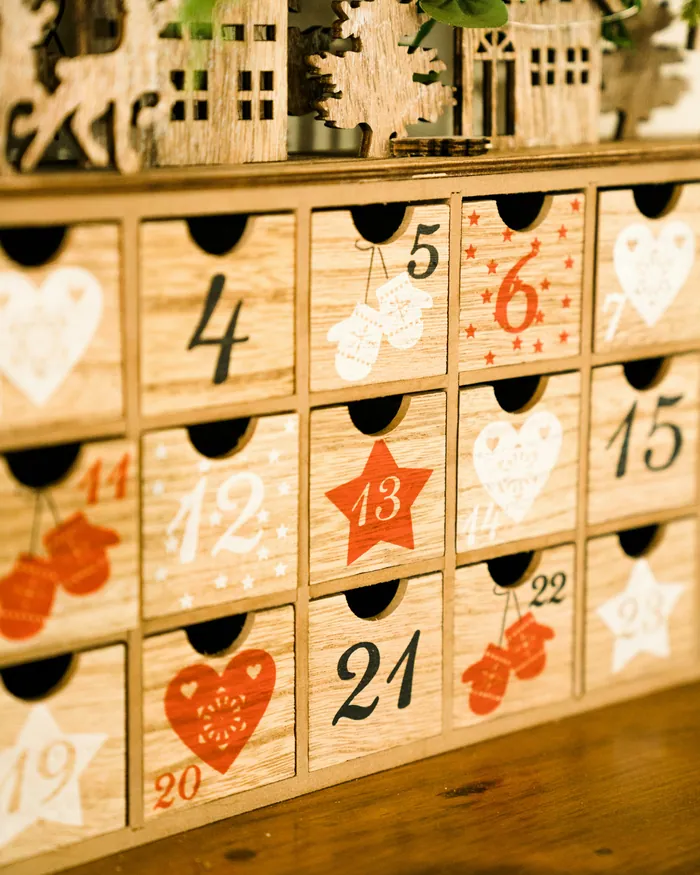
Choose an advent calendar for the children you have
An advent calendar can contain chocolate, pictures, stories or activities. Choose according to the child's age, interests and the effort you want to spend preparing it. A ready-made version can be a perfectly good family tradition; a handmade one does not earn extra affection because it took longer.
If children share a calendar, explain the turn-taking beforehand. Check food ingredients and product age guidance where relevant. For refillable drawers, keep their size in mind before buying fillers. A large collection of tiny objects can become clutter quickly, so mix in experiences you already have planned or a short note that leads to a shared book.
Idea 03
Try a book countdown without buying a library
Wrap or number a few books you already own and read one together when it suits the evening. You can repeat favourites and borrow others rather than buying a new book for every day. Children often like knowing which story comes next.
If wrapping creates more work than enjoyment, use paper labels or a small stack in a basket. Let older children read a page to younger siblings, or choose the story themselves. Keep the activity comfortably within bedtime rather than turning it into another production. The useful part is the time beside each other, with the same page in view and somebody doing the voices.

Idea 04
Write letters to Santa in the child's own words
Let the child decide what to say. They may write a list, describe their year or draw the thing they are hoping for. Younger children can dictate while an adult writes, then add their own marks or picture. Keep their spelling if you are saving the original.
If you plan to send letters through a postal programme, check that programme's current instructions and whether it accepts letters from your location. Do not assume a local reply service or a reply deadline. You can also keep the letter at home as part of your family tradition. Read it together, place it somewhere chosen and make a copy before it leaves.

Idea 05
Give Elf on the Shelf a manageable role
For families who enjoy Elf on the Shelf, small scenes can be enough: the elf beside a book, looking at the advent calendar or sitting near a drawing. These are ideas for your own household rather than instructions for following a particular branded story. Choose the version that your children enjoy.
Decide how often you want to move it and keep a short list of easy places. Avoid scenes that require a large mess or put small objects within reach of children or pets. If the idea begins to feel like an obligation, simplify it. The family does not need a more complicated elf simply because somebody else's photograph looks impressive.
Idea 06
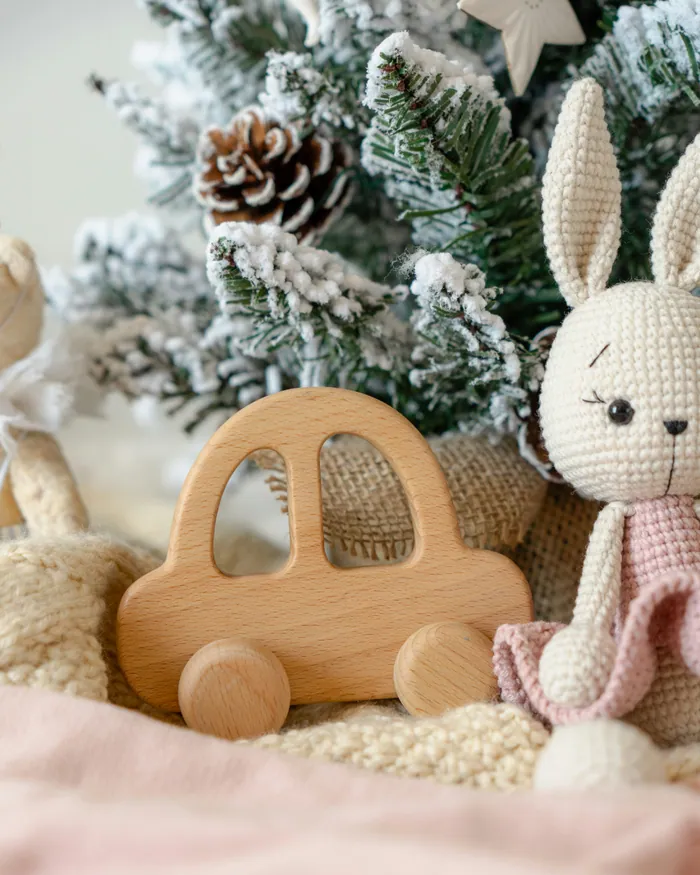
Use Christmas songs as the background to something
A small playlist can accompany decorating, breakfast or putting the kitchen back in order. Let each person choose a song and add it to the list. You may end up with carols, familiar pop songs and one selection that makes sense only to the youngest child.
Give songs a job rather than turning the whole evening into a performance. A particular track can become the one you play while hanging the last ornament. If children want to sing, join them without correcting every word. Keep the volume comfortable and the playlist short enough to recognise. You can remember the chorus long after everyone has forgotten which decoration went where.
Idea 07
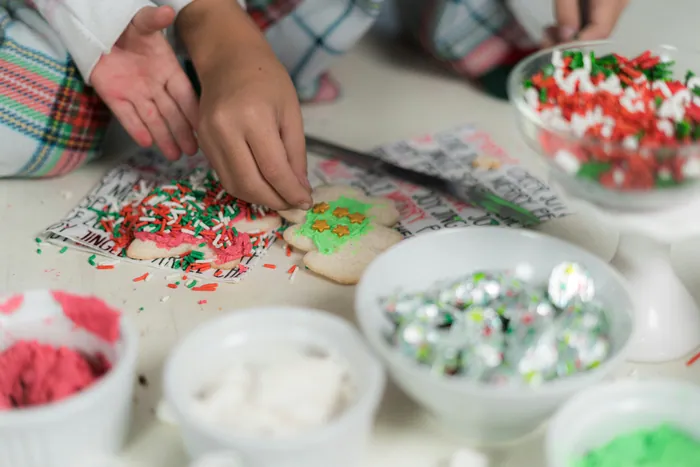
Put a baking afternoon on the calendar
Choose one bake that allows children a real task: pressing cutters, arranging shapes or decorating cooled biscuits. Prepare the work surface before inviting them in and keep the recipe within the time you have. An activity card that says baking does not need to mean a whole afternoon of complicated recipes.
Our Christmas baking guide gives you a place to start. Put some of the finished biscuits aside for another evening if appropriate, following the recipe's storage guidance. Photograph the work in progress as well as the tray at the end. The flour on a sleeve belongs to the story too.
Idea 08
Make the Christmas Eve box useful
A Christmas Eve box can hold pyjamas, a book and a small activity for the evening. Put in things you intend to use, rather than objects that exist only to fill the box. A shared family box is an option if separate ones would mean too much wrapping or too many duplicate items.
Let the contents lead into the routine: change into pyjamas, read the book, put a drawing beside the tree. If clothing is part of the box, try it beforehand so the reveal does not become a fitting session. Our matching pyjamas article helps you choose something comfortable for the whole morning as well.

Idea 09
Leave Christmas Eve some quiet
Christmas Eve can become crowded with last-minute jobs, visiting people and excitement. Choose the one or two things you would miss if they did not happen, then put the practical tasks around them. A story and a short walk may be quite enough for the children.
Lay out anything needed for the morning while there is still time. Share the jobs between adults and keep the child's bedtime routine recognisable where possible. If your family enjoys a later celebration, plan around that deliberately. Traditions can be different in each household; the useful question is whether the evening works for the people who will wake up there.

Idea 10
Keep one small record of the season
Save a letter, a drawing or a photograph that shows what your children were interested in this year. Write a brief note on the back or in a digital folder so you can find it later. You do not need to document every numbered envelope.
If a family photoshoot is part of your plans, give it its own place in the countdown rather than adding it to an already full day. Check the current TSC sessions and choose an option that fits your group. Then let the other photographs be ordinary ones: the book, the breakfast and the person opening the wrong drawer again.

A Christmas that fits your family
Pick one countdown, a few activities you would do anyway and a Christmas Eve box with something useful inside. Leave room to repeat a favourite story, move a plan or do very little on a tired evening. The traditions children recognise are often the small ones that return. Keep those, save a little record of the year and let the rest of December remain a month your family can live through comfortably.
A few questions
Try short activity notes, drawings, a book choice or a small age-appropriate item. You can include things already planned, such as decorating or visiting relatives. There is no need for a new purchase behind every number.
Your own family activity can be as simple or frequent as you choose. If you follow a branded tradition, use its story as intended; if you are making your own playful scenes, set a routine you can manage and explain it consistently to the children.
Choose something the family will use that evening: comfortable pyjamas, a book or a small shared activity. A reused box and a handwritten label are enough. Check the suitability of food and small items for the children receiving them.

The Setup Collective designs and builds Christmas rooms in Dubai, then photographs families in them. This season: the Christmas Room, the Christmas Kitchen and Christmas Morning. Our photographs shown here are from Christmas 2025. Who we are