Christmas personalised gifts: keepsakes with a story
A child's name, their handwriting or one good photograph: choosing the details worth keeping.
Christmas personalised gifts are most interesting when the added detail means something. A name can make an ornament belong to one child. A short line in their handwriting can say more than a large printed message. A photograph can bring somebody into the room when they cannot be there for the meal.
We work with family photographs at The Setup Collective, so we think about what happens after a picture leaves the gallery. The image that gets printed, placed on a shelf or sent to a grandparent becomes part of ordinary life. That is a useful test for any keepsake: where will it go, who will use it and what will it remind them of?
This guide is about choosing the story and the object together. It covers ornaments, photo gifts, personalised gingerbread decorations and Christmas chocolates, with practical questions for the maker before ordering. For deadlines and ordering strategy, use our separate personalised gifts planning article. Here, begin with the person receiving the gift and one detail that belongs to them. You may need much less personalisation than the product page offers.
The pieces you need
A reason for the gift. Write one sentence about what you want the gift to mark: a first Christmas, a family home, a shared joke or time spent together. That gives you something to judge products against. An object that fits the story is usually a better choice than one with many customisation boxes.
The exact spelling. Check names, punctuation and any date before sending the order. Ask the person who knows if you are uncertain, particularly about initials or a family name. Keep the agreed spelling in the same message as the order so it is easy for the maker to refer to.
A suitable photograph. For printed photo gifts, use the original file where possible and check the printer's requirements. A screenshot or downloaded message preview may not give the same result. Look at the proposed crop before approving it, especially if faces or hands sit near the edge of the photograph.
A clear size reference. Check dimensions rather than guessing from the product photograph. An ornament may be larger than your tree branches suit, or an engraved box may not hold the letter you want to put inside it. Compare the measurements with an ordinary object at home before deciding.
A proof where it is offered. Ask whether the maker sends a digital layout or other proof before production, and when you must respond. Check the text, placement and crop carefully. Save the approved version. Personalisation is easier to correct while it is still a layout than after it has been printed or engraved.
Care and storage information. Ask how to clean, display and store the item. A keepsake should have a practical home after the wrapping is gone. Keep the care instructions with it, particularly for fragile ornaments, printed photographs or pieces made from materials the recipient may not have owned before.
A short note. Explain the connection in your own words. The maker can print a name, but you can say why you chose the picture or why the phrase makes you think of this person. The note does not need to be long. Put it somewhere the recipient can keep with the gift.
A gift suited to the recipient's home. Think about the space the person has and whether they enjoy keeping physical objects. A small print or ornament may fit better than a large decorative box. Ask yourself who will display it and where. Personalisation cannot make an unsuitable object practical, so choose the form with the same care you give the name or photograph.
An order record someone else can read. Keep the product details, approved spelling, proof and delivery agreement together. If another adult needs to collect the gift, send that record rather than a vague description. Include the maker's contact and any collection reference. A personalised order should be easy to identify without relying on the organiser remembering each detail during a busy week.
A decision about duplicates. For gifts to several relatives, choose what should be shared and what should be different. The same family photograph can work for everyone while the note addresses each person. You do not need to commission a separate object for every recipient to make the gift feel personal. Put the thought into the relationship as well as the production.
A record of the original. Save the full-resolution photograph, handwriting scan or drawing you used in a clearly named folder. It gives you a useful starting point if the recipient wants another copy later. Keep it with the order information where appropriate. The source can have value in its own right, particularly when it records a child's work at a particular age.

Idea 01
Choose Christmas personalised gifts by the story
A personalised object begins to feel like a keepsake when it marks something specific. That could be the home where you spent the year, a word a child currently says or a photograph of three generations together. Start with that detail and find the object that carries it well.
Try to avoid adding information simply because there is room for it. A small ornament may need only a name and a year. A framed picture may need no text at all. The purpose is to make the connection clear to the recipient, not to explain the entire family's history on one surface. You can put the longer story in the accompanying note.
Idea 02
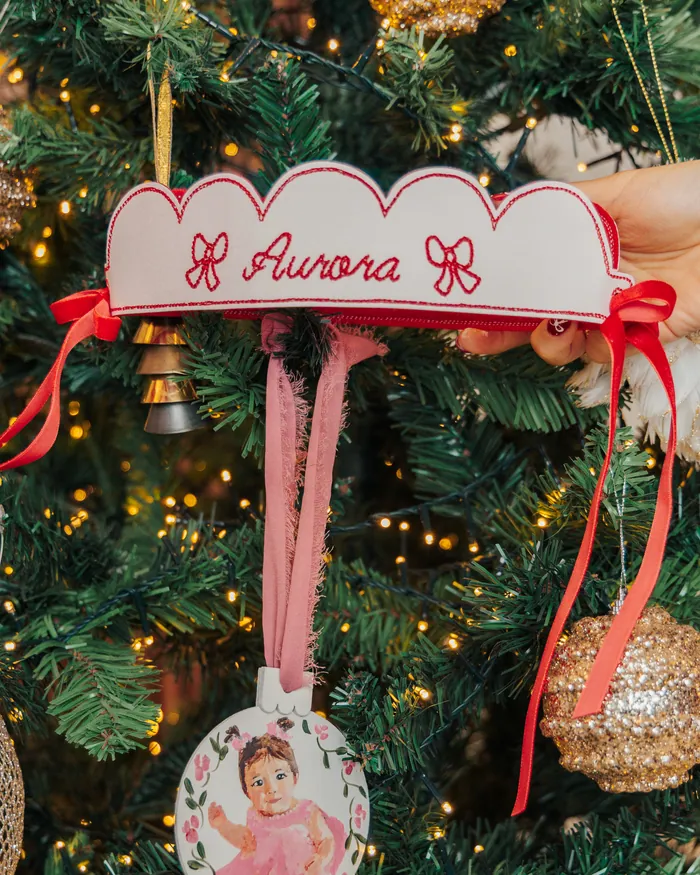
Give each child an ornament that can return
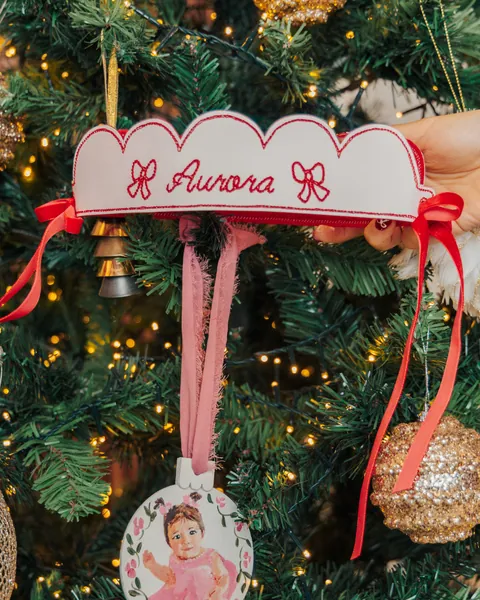
A named ornament can come out with the tree each season. Choose a material and shape that suit the child's age and how your family decorates. If the piece is fragile, give it a place adults can manage and include a sturdier ornament the child can hang themselves.
Think about the future storage too. A small protective box and a label help you find it again next year. You can mark a particular season without buying a new ornament for every person every time. Leave room on the tree for school-made decorations and unexpected favourites; those pieces often have just as much to say about the family.

Idea 03
Keep handwriting exactly as it is
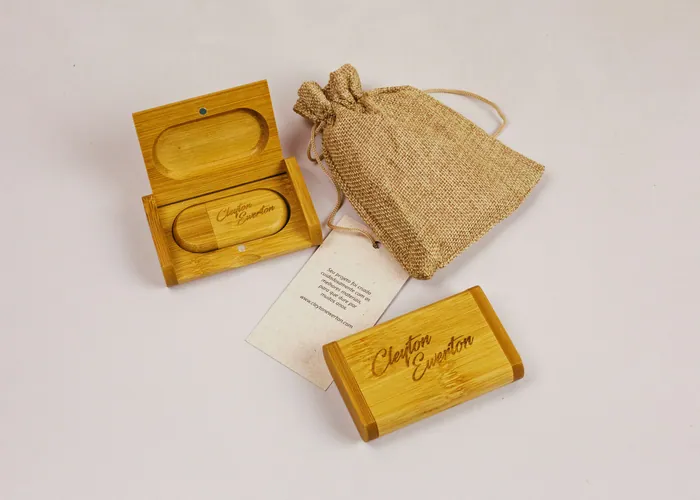
A child's handwriting, drawing or signature can make a simple gift feel specific to a moment in their life. Ask the maker what kind of file they need and whether they reproduce the marks directly or redraw them. Check the proof carefully if preserving the original character matters to you.
Keep the paper original as well as the scan. Avoid tidying the drawing before you photograph it unless the maker needs a clearer background. The uneven letters and unusual proportions are part of the reason to save it. A small reproduction on a card or inside a box may be enough; it does not always need to become a large display.
Idea 04
Print one photograph before planning a whole album
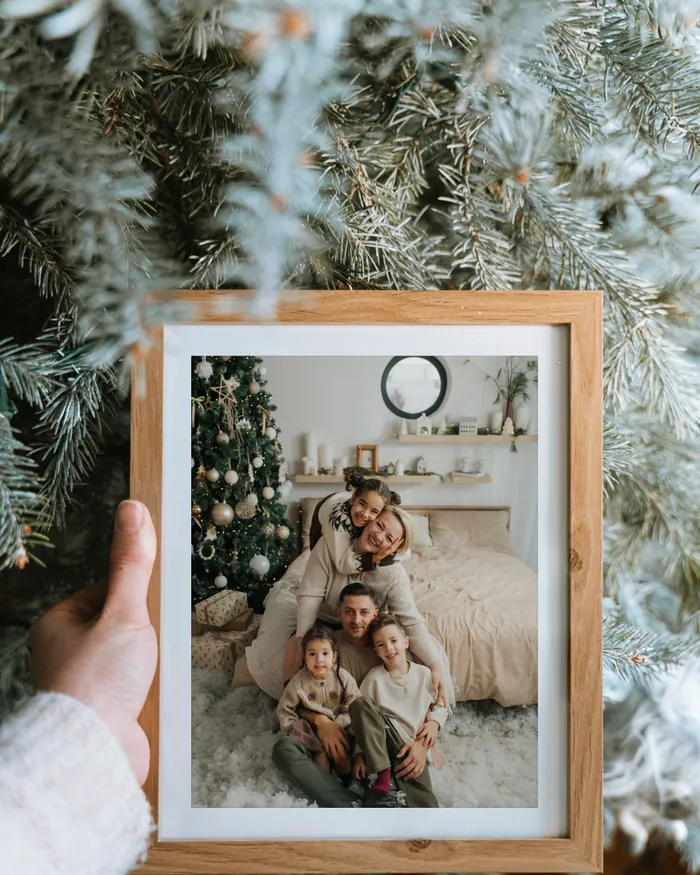
A single photograph is a useful starting point for a family gift. Choose an image that feels like the people in it, then think about where the recipient will put it. A desk, bedside table and hallway wall each call for a different size or presentation.
Use the printer's file and crop guidance, and check the frame opening rather than only its outside dimensions. Leave time to inspect the finished print before wrapping. If you would like new seasonal photographs, our Christmas photoshoot guide helps you choose an appropriate session. The photograph can also come from an ordinary day you already have in your camera roll.
Idea 05
Make a photo book small enough to finish
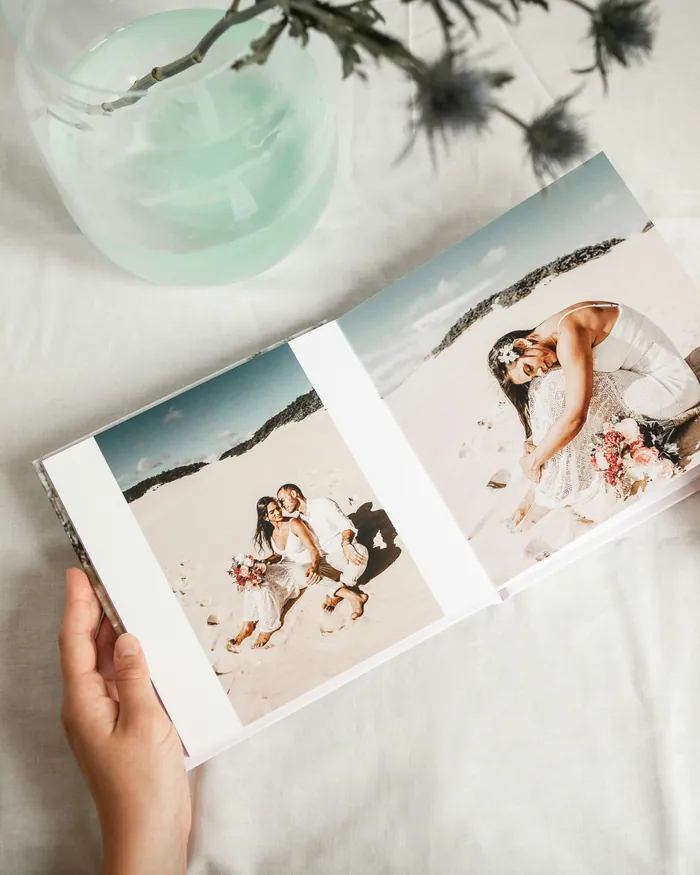
Choose a clear theme for a photo book: one year, one visit or one family Christmas. Select the pictures before spending a long evening on layouts. A shorter book with a beginning and an end is usually easier to complete and to read than a large unfinished archive.
Keep text brief and factual. Names, places and a sentence about what was happening help the pictures make sense later. Check the printer's recommended file quality, margins and delivery time. Order with enough time to see the physical book before giving it if possible. Our family gift ideas article includes other presents that fit shared family life.
Idea 06
Choose personalised gingerbread decorations deliberately
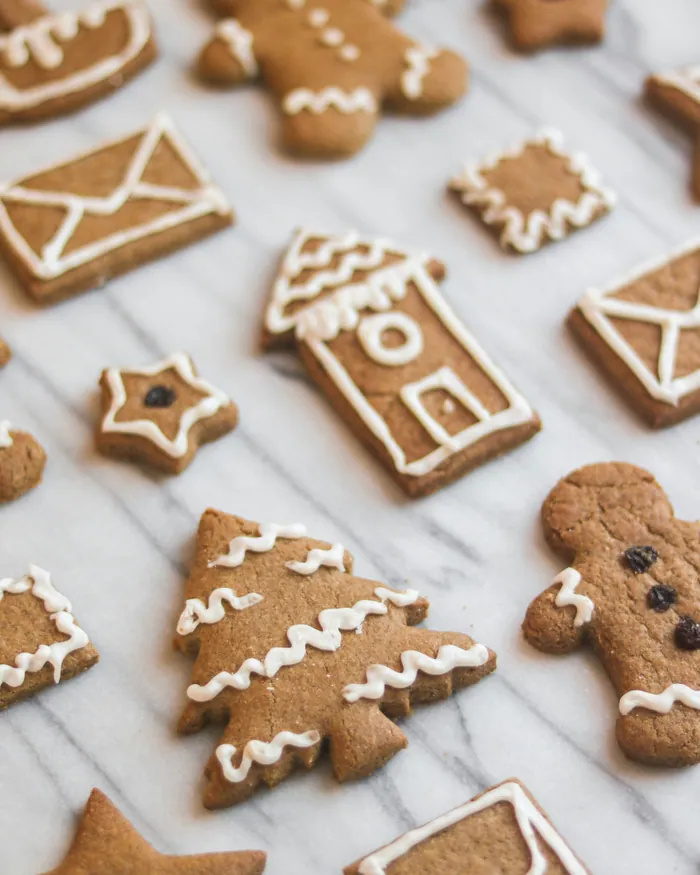
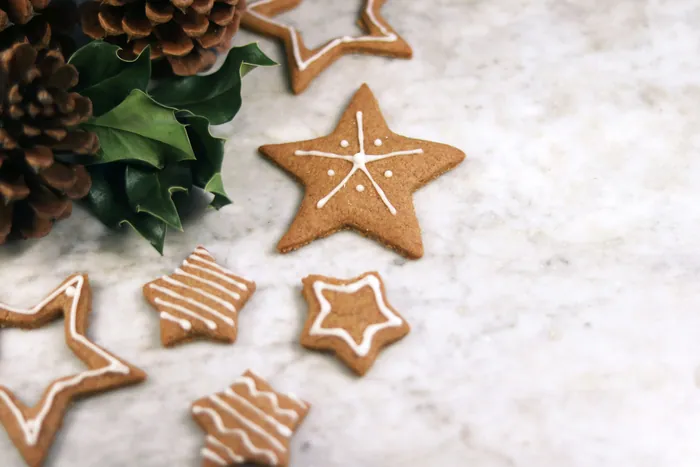
Personalised gingerbread decorations might be edible biscuits or decorative objects made to look like gingerbread. Confirm which kind you are ordering. For edible pieces, ask about ingredients, allergen information, shelf life and storage. For decorative versions, check the material and whether they are suitable for the way you intend to display them.
A name piped on a biscuit can make a thoughtful place setting or small gift. Give it with the information needed to use it properly rather than letting the recipient guess. If you make your own, use a recipe intended for the finished item and keep food decorations distinct from non-edible craft materials.
Idea 07
Let a homemade decoration carry the personal detail
A decoration can be personal because a child made it, even if nobody added their name. A paper shape, a painted ornament or a drawing tied with ribbon can record a particular stage in their life. Write the name and season discreetly on the back if you want to remember who made it.
Keep the activity appropriate to the child and supervise tools and materials. Do not require several identical results for different relatives if that makes the making tedious. One original and a reproduced drawing on accompanying cards may be enough. For a baking version, see our Christmas baking article and choose the part the child enjoys doing.
Idea 08
Pair Christmas chocolates with a personal note
Christmas chocolates can be a small gift on their own or a companion to a keepsake. Choose them according to the recipient's tastes and check ingredients and allergen information. Ask the seller about storage and transport, especially if the gift will spend time travelling or waiting for collection.
Personalise the note rather than assuming the food needs custom packaging. You might mention the evening you want to share them or the flavour you remembered the recipient liking. Keep the amount suitable for the occasion. A small box chosen thoughtfully can be more useful than a large assortment that includes very little the person actually wants to eat.
Idea 09
Give a keepsake a place to live
Before ordering a gift, imagine its home in the recipient's life. A busy household may appreciate a small ornament more than another large display object. A relative who travels often may prefer a compact photo book or print. Size and use matter as much as the sentiment.
If the gift is a box for letters or family records, make sure it fits the intended contents and can be opened comfortably. Include one meaningful item to begin it, rather than presenting an empty storage task. Explain what you put inside and leave the recipient room to decide how the collection grows. The gift should invite a habit, not create an obligation.

Idea 10
Check the finished gift before wrapping
Open the delivery, compare it with the approved order and look for spelling, crop or production errors. Check that the promised pieces are included and contact the seller promptly if something needs attention. Keep your order record until the issue is settled.
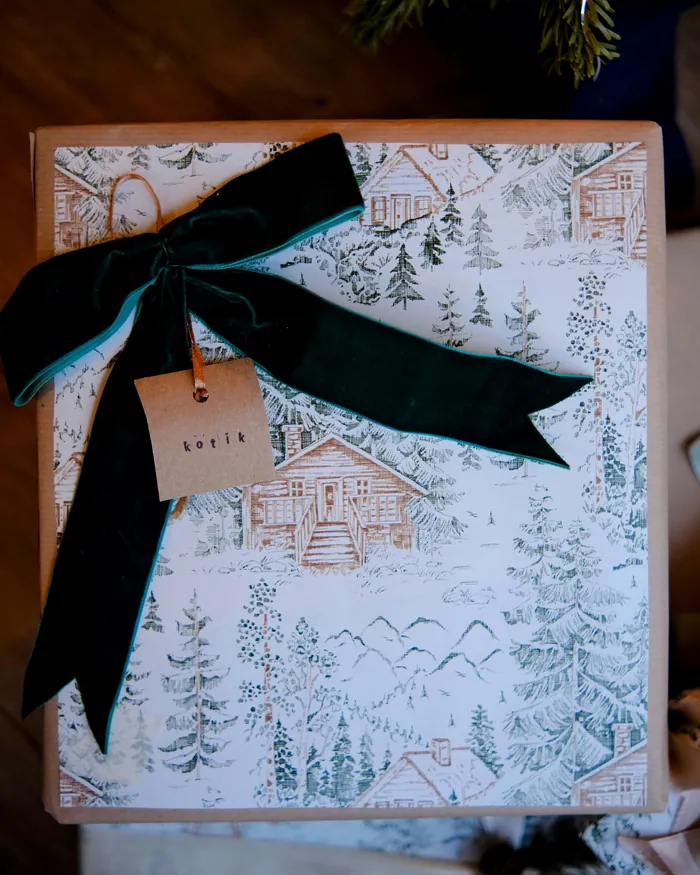
Wrap the gift in a way that protects it and lets the recipient recognise what is fragile. Add the care information and your note. If you are sending it elsewhere, use our ordering and delivery guide to plan the timing. A keepsake has a better beginning when it arrives complete, with its story attached and without a rushed explanation over the phone.
A Christmas that fits your family
Choose one detail that belongs to the person, check it carefully and give it an object with a useful home. A name on an ornament, handwriting in a small box or a printed family photograph can be enough. Add a note that explains the connection and keep the making and ordering manageable. The best keepsake is the one somebody has a reason to take out again after Christmas has been packed away.
A few questions
A connection the recipient recognises, combined with an object they can keep or use. Names, handwriting and photographs can provide that connection, but they are not compulsory. A handmade decoration or a familiar family object can carry a story without added personalisation.
It depends on the product. Edible gingerbread has a shelf life and should be stored and used according to the maker's instructions. Decorative gingerbread-style objects may last longer. Confirm the material and purpose before ordering rather than treating an edible biscuit as a permanent ornament.
TSC's offering is photography. Prints and photo gifts in this article are ideas you can arrange with your chosen supplier. Check the current TSC sessions if you would like photographs to use in a family gift.

The Setup Collective designs and builds Christmas rooms in Dubai, then photographs families in them. This season: the Christmas Room, the Christmas Kitchen and Christmas Morning. Our photographs shown here are from Christmas 2025. Who we are